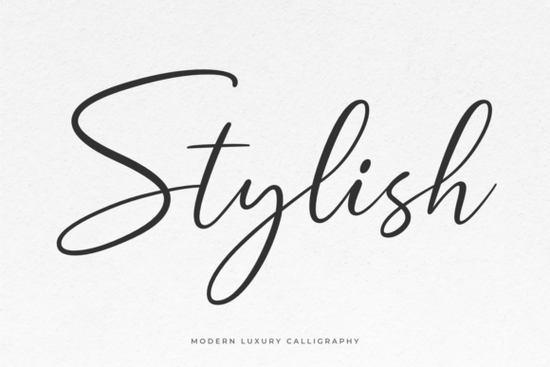
Finding a script typeface that balances readability with character often feels like searching for a needle in a haystack. Many available options are either too loose for serious branding or too rigid for creative hobbies. That is why the Stylish Font stands out as a reliable choice for various applications. It offers a graceful, modern calligraphic feel without the clutter that sometimes ruins a layout.
Is this script suitable for professional projects?
When working on client identities or merchandise, consistency matters. You need a font that looks polished across different sizes. Whether you are designing wedding invitations, business cards, or social media graphics, this font provides a rhythmic flow that guides the eye smoothly. Unlike some display scripts that disappear on small screens, the letterforms here maintain their shape clearly. It allows you to compose layouts that feel both personal and intentional.
If your projects require a bold impact or heavier weights, you might want to explore collections found at thick font script fonts. However, for delicate branding where legibility is key, this option strikes a necessary balance. It works particularly well when paired with a clean sans-serif body text, creating a contrast that highlights the hand-lettered aesthetic without overwhelming the reader.
What technical benefits come with the PUA encoding?
One of the most frustrating aspects of downloading font files is handling special characters manually. Because this specific family is PUA encoded, accessing alternate glyphs becomes much simpler for desktop software. You do not need to jump through hoops to insert swashes or ligatures within your design program. This streamlines the workflow significantly, allowing you to focus on the visual composition rather than the mechanics of editing text.
Stylish is available through standard font repositories and marketplaces. If you are familiar with other stylized libraries, such as nothing over font script fonts, you will notice similar attention to glyph variation. These tools are essential for crafters using machines like Cricut or Silhouette, where precise cuts depend on accurate path data generated by the typeface.
Are there alternatives with a different personality?
Design rarely happens in isolation, and you might already have other assets in your folder. While this set leans towards a refined elegance, other libraries offer a rawer or more artistic edge. For instance, checking out autography font script fonts gives access to types that feel more organic and fluid, almost like rapid sketching. Meanwhile, smithson font script fonts might suit projects requiring a structured, vintage calligraphy influence.
Sometimes you need a touch of whimsy that goes beyond traditional script structures. Exploring overthinker font script fonts could provide that unexpected flair for experimental designs. Regardless of which path you choose, ensuring the primary and secondary typefaces harmonize is crucial for a cohesive final product.
What steps ensure your installation goes smoothly?
Before committing a full project plan, test the typeface thoroughly. Verify how the letters interact with space, especially in long strings. Once you confirm the spacing works for your intended medium, you can move forward with confidence.
- Test Compatibility: Open the file in Adobe Illustrator, InDesign, or Cricut Design Space to ensure all characters render correctly.
- Check Licensing: Confirm whether the subscription or single purchase covers commercial use for physical products like t-shirts.
- Pair Selection: Draft headlines using this font and fill in body text with a neutral typeface to check for harmony.
- Export Test: Create a PDF or PNG preview to see how the curves behave when scaled down for thumbnails.
- Verify Swashes: Ensure the extra decorative elements appear correctly via the font menu or OpenType features.
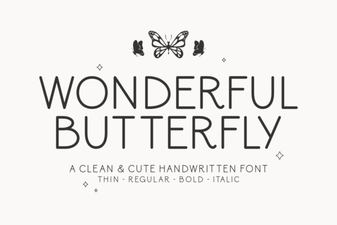 Wonderful Butterfly Fonts for Creative Designs
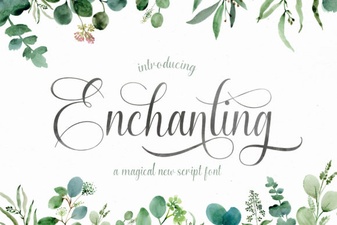 Elegant Script Fonts for Creative Projects
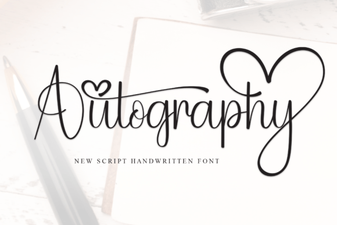 Craft Personal Projects with the Autography Font
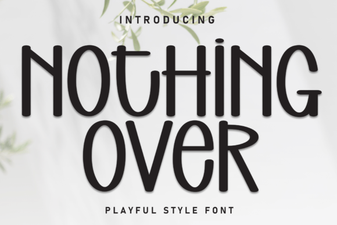 Nothing Over Font: Designing with Visual Simplicity
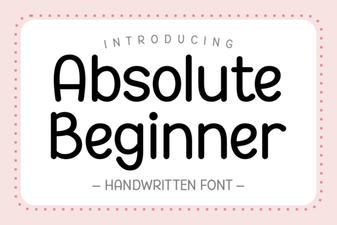 Choosing Fonts for Your First Design Project
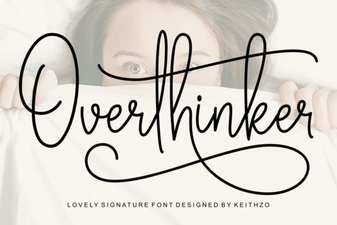 Overthinker Font: a Creative Tool for Design Projects